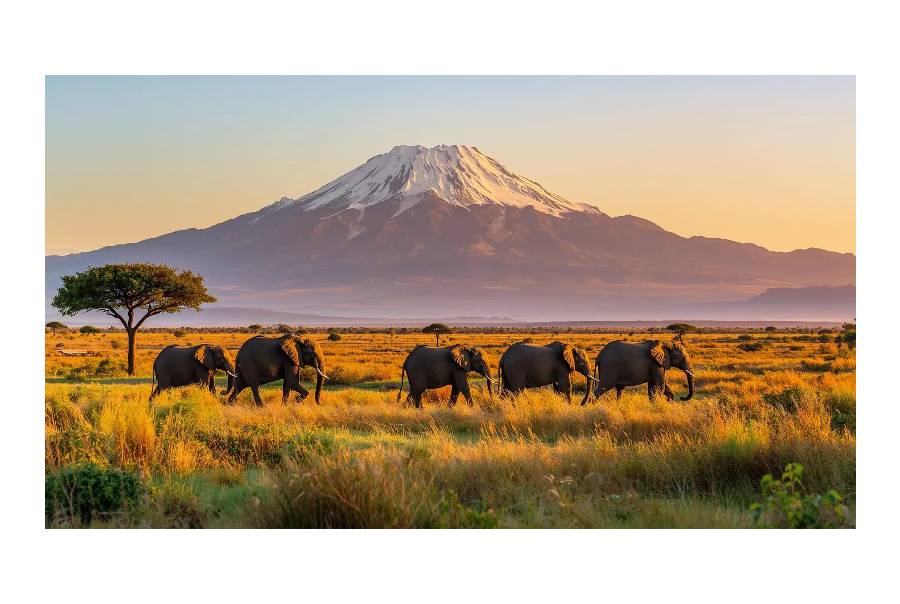
Picture a herd of elephants crossing open plains beneath the snow-capped peak of Mount Kilimanjaro. That image is the Africa of most people’s imagination, and Amboseli National Park is the place where you can see it for real. Known as the Giants’ Playground, Amboseli is one of the best places on the continent to get close to free-ranging elephants. This guide explains what makes the park special, when to go, where to stay and how we plan an Amboseli safari so that you spend your time with the herds instead of in a queue of vehicles.
Thank you for reading this post, don't forget to subscribe!Amboseli National Park at a glance
- Where: southern Kenya, on the border with Tanzania and about 250 km from Nairobi. You can drive in around five to six hours or take a short flight to the Amboseli airstrip.
- Size: about 392 square kilometres, a small part of a much larger ecosystem that links with Tsavo West and the slopes of Kilimanjaro.
- Status: gazetted as a national park in 1974 and recognised as a UNESCO biosphere reserve in 1991.
- Known for: more than a thousand elephants, big-tusked bulls, wide open views and the Kilimanjaro backdrop.
Why Amboseli is the best place for elephants
Several things come together in Amboseli. The vegetation is sparse during the long dry months, so animals are easy to see. Underground water from Kilimanjaro feeds permanent swamps and springs, which pull elephants and other wildlife from across the plains. And the herds are used to vehicles, so they carry on feeding, bathing and playing while you watch from a respectful distance.
Amboseli’s elephants have been studied for decades by the Amboseli Trust for Elephants, one of the longest-running elephant research projects in the world. Many of the families are known by name, and you can often see several generations together. For more background, read this Lonely Planet feature on Amboseli or the overview of Amboseli National Park.
Seeing Kilimanjaro from Kenya
Although Mount Kilimanjaro stands in Tanzania, some of its best views are from Kenya, and almost all of the classic photographs are taken from within Amboseli. A few tips will help you get the shot:
- Go early. The summit is usually clearest at sunrise and in the late afternoon. Clouds often build around midday.
- Look for a rise. A high vantage point such as Observation Hill gives you panoramic views over the swamps and the plains.
- Frame the foreground. Elephants, acacias and grasslands make the image, so ask your guide to position the vehicle with the mountain behind the herd.
Visibility can vary by day and by season, so we never promise a clear summit, but with a few mornings in the park the odds are in your favour.
Luxury in Amboseli means access
Amboseli is popular, and the main park roads can get busy with day trippers. For us, luxury here is about access: time, space and a vehicle that is all yours. That is why we offer private photographic vehicles, set up for guests who want to take their time. You can stay with one herd for hours, take close-up shots and never feel rushed by a convoy behind you.
We also use the community-owned land around the park. Group ranches such as Kimana and Olgulului form important wildlife corridors, and private conservancy areas can offer a quieter experience with far fewer vehicles. Rules vary by area, so we check what is allowed, from guided walks to sundowners, before recommending a stay.
Where to stay in Amboseli
We work with leading lodges and camps, including Tortilis Camp and Tawi Lodge. Both put you close to the elephants and the mountain, and both are known for a comfortable, well-run stay. The best days finish in your suite with a drink in hand and the mountain in view, after what we call the Exceptional Elephant Encounter: a late-afternoon drive that ends with a herd walking past in golden light.
More to do in and around Amboseli
- Birdwatching: the swamps attract many species of waterbird, which are easiest to see in the dry season.
- Cultural visits: a community-hosted visit to a Maasai village adds context to the landscape you are driving through.
- Sundowners: a drink on the plains with the mountain turning pink is one of the most memorable moments of the trip.
The best time to visit Amboseli
- June to October: the main dry season, with elephants gathered around the swamps and the clearest views.
- January and February: a shorter dry spell with good game viewing.
- March to May and November to December: the rains bring green scenery, fewer visitors and lower rates, but the summit is more often hidden in cloud.
Combine Amboseli with the rest of Kenya
Amboseli works well as one stop on a longer itinerary. Many guests pair it with the big cats and migration of the Masai Mara, the rare northern species of Samburu, and a finish on the coast with our Watamu and Diani bush-to-beach circuit. If seeing Kilimanjaro from its own side appeals, our Tanzania destination page shows the packages we offer across the border, including a hot air balloon safari over the Serengeti.
Why choose B Hudson Tours for Amboseli?
A real high-end safari is not just about booking hotels. We arrange seamless itineraries and handle the complex logistics, including private air charters and VIP meet and greets, so you can focus on the wow while we take care of the how. Here is what that looks like in practice:
- Bush-to-beach designers. We connect days of game drives and a week on the coast so that the whole journey flows.
- The Kenya others do not see. We focus on privacy and on experiences ordinary visitors miss, such as private conservancies, where rules allow off-road drives, night drives and walks with a guide.
- Truly bespoke slow safaris. We value depth over speed. Our tailor-made trips are built around your pace, from tracking wildlife on foot to a night under the stars where a camp offers it.
See what we offer on the Kenya destination page, or contact us for a custom consultation.
Amboseli National Park FAQs
How many days do I need in Amboseli?
Two to three nights is ideal. That gives you several early-morning and late-afternoon drives and a chance to catch the mountain on a clear day.
Will I see Kilimanjaro on every trip?
Not always. The mountain is clearest early in the morning and late in the day, and cloud can hide it, especially in the rainy months. Staying a few nights improves your chances.
Is Amboseli good for photography?
Yes. The open landscape, the elephants and the mountain make it one of the best photography destinations in Africa, especially with a private vehicle.
Is Amboseli suitable for families?
Yes. The terrain is flat and sightings are frequent, which keeps children engaged. Check minimum ages with each lodge.
Ready to plan your Amboseli safari? Speak to B Hudson Tours and we will design it around you.
Masai Mara Safari Guide 2026: Where to Go and Where to Stay – B Hudson Tours Ltd
[…] Mara also combines well with the rest of Kenya. You can add the elephants and Kilimanjaro views of Amboseli, the rare northern species of Samburu, or finish on the beach with our Watamu and Diani […]
Samburu National Reserve: Special Five Safari Guide 2026
[…] north and then continue south to the Masai Mara, add the elephant herds and Kilimanjaro views of Amboseli, or finish on the beach with our Watamu and Diani bush-to-beach […]