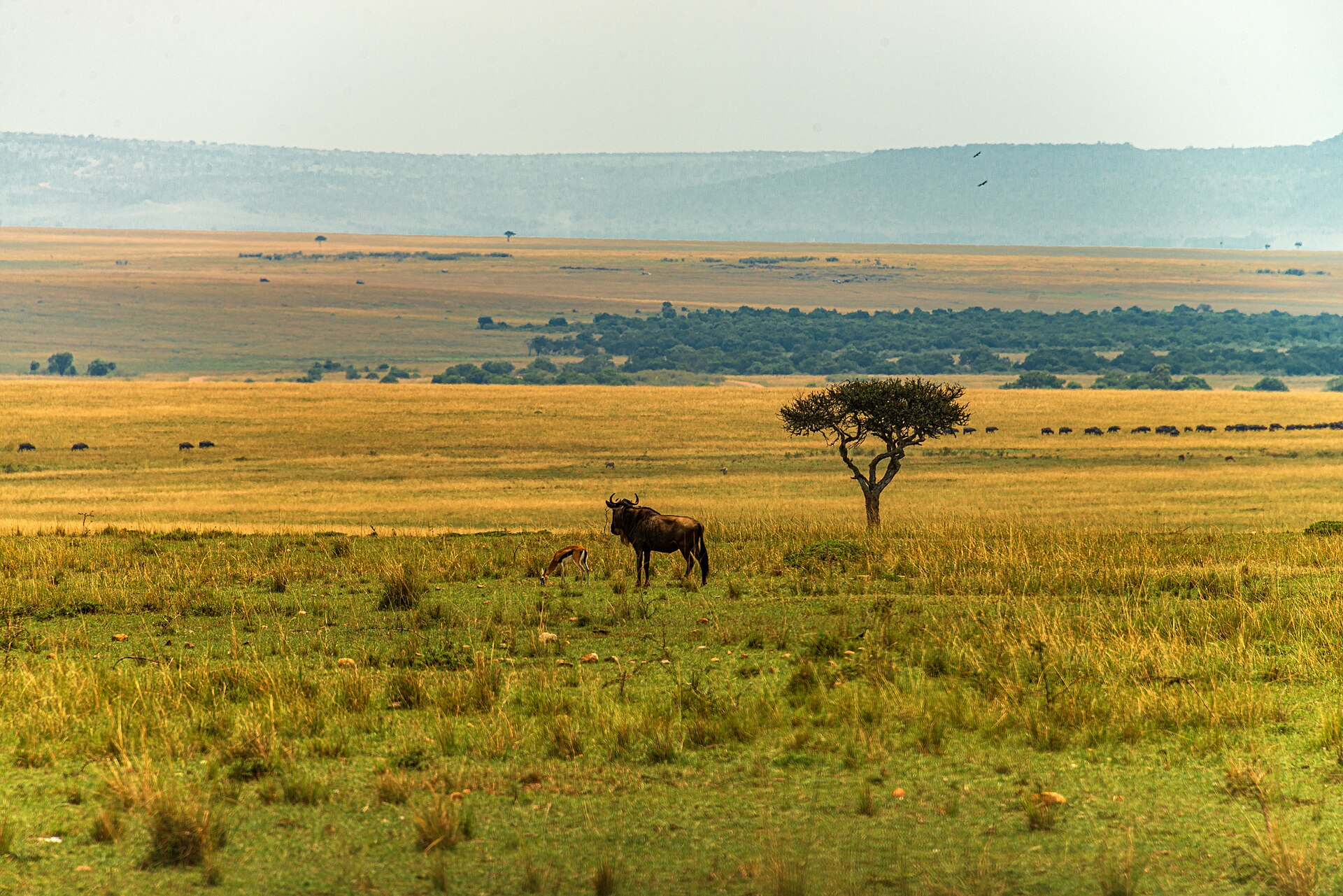
Every year, more than a million wildebeest, along with hundreds of thousands of zebras and gazelles, move in a great loop across the Serengeti in Tanzania and the Masai Mara in Kenya, following the rains and fresh grass. The most dramatic moment comes when the herds plunge into the Mara River, where crocodiles wait in the water and lions wait on the banks. This Great Wildebeest Migration guide explains where the herds are each month, when to see the river crossings, where to stay and how to plan your trip.
The Great Migration at a glance
- What: the year-round movement of about 1.5 million wildebeest and hundreds of thousands of zebras and gazelles through the Serengeti-Mara ecosystem.
- Where: the Serengeti National Park in Tanzania and the Masai Mara National Reserve and surrounding conservancies in Kenya.
- When the herds are in Kenya: usually from July to October, although the timing changes each year with the rain.
- Highlight: the Mara River crossings, which can happen at any time from about July to October.
Where are the herds? A month-by-month guide
The migration is a continuous circle, not a single event. The herds follow the rain, and no two years are the same, so treat these months as a guide rather than a timetable.
January to March: calving in the southern Serengeti
The herds gather on the short-grass plains of the southern Serengeti and the Ndutu area. From late January to early March, around half a million calves are born within a few weeks. Predators follow closely, and cheetahs, lions and hyenas are often seen hunting.
April to May: moving north and west
The long rains arrive, and the herds start moving north-west through the central Serengeti. This is the quietest time of year for visitors, and lodge rates are lower.
June: the Western Corridor and the Grumeti River
The herds reach the Western Corridor of the Serengeti, where they cross the Grumeti River. The crossings here are smaller than on the Mara River, but large crocodiles make them dramatic.
July to October: the Masai Mara and the Mara River crossings
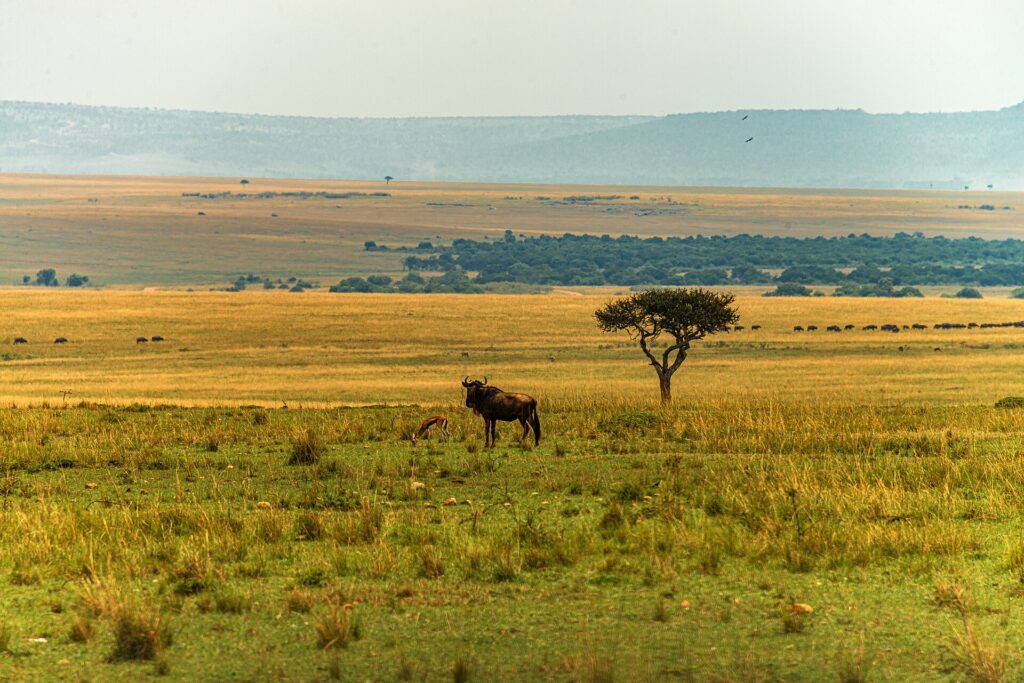
The herds move into the northern Serengeti and across the border into the Masai Mara. This is the peak season in Kenya. Wildebeest and zebras spread out across the Mara’s grasslands, and predators are everywhere. The herds cross the Mara River and the Talek River many times, in both directions, as they move between grazing areas.
November to December: heading south
The short rains begin, and the herds return south through the eastern Serengeti towards the calving grounds, completing the circle.
The Mara River crossings: what to expect
A river crossing is one of the most exciting wildlife events in the world, but it takes patience. Herds can gather on the bank for hours, or even days, before the first animal jumps. Then thousands follow in a rush of dust and water, while crocodiles strike from below.

To give yourself the best chance:
- Stay at least three or four nights. Crossings cannot be predicted, so more time means more chances.
- Stay close to the river. Camps near the Mara River save driving time when herds start to gather.
- Take a full-day game drive. Bring a picnic lunch and wait at the river instead of driving back to camp at midday.
- Use an experienced guide. Good guides read the herds and know the crossing points.
- Respect the rules. Vehicles must stay back from the banks so that animals can cross. Rangers enforce this, and it protects both the wildlife and your experience.
Masai Mara Reserve or a private conservancy?
The Masai Mara National Reserve is surrounded by private conservancies, such as Mara North, Olare Motorogi and Naboisho. Each option has its strengths during the migration.
The National Reserve
The reserve, including the Mara Triangle in the west, is where the main river crossings take place. Staying inside the reserve, or close to the river, gives you the most time at the crossing points. The trade-off is that popular sightings can draw many vehicles in peak season.
Private conservancies
Conservancies limit the number of vehicles and beds, so sightings feel more private. They also allow activities that the reserve does not, such as off-road driving, night game drives and guided walks. The herds spread into many conservancies in peak season, and you can still drive into the reserve for a river crossing day. Conservancy fees support local Maasai landowners.
Where to stay for the migration
These are some of the camps and lodges we book for migration safaris:
- Governors’ Camp and Governors’ Il Moran Camp: classic tented camps on the banks of the Mara River.
- Mara Serena Safari Lodge: in the Mara Triangle, with views over the plains and access to western crossing points.
- Ashnil Mara Camp: a tented camp on the Mara River, in the heart of migration country.
- Karen Blixen Camp: on the Mara River in the Mara North Conservancy, available as 3-day and 4-day safari offers.
- Olare Mara Kempinski: a luxury camp in the Olare Motorogi Conservancy, known for excellent big-cat sightings.
- The Ritz-Carlton Masai Mara Safari Camp: an ultra-luxury camp on the Sand River, close to the border with the Serengeti.
- Muthu Keekorok Lodge and Fig Tree Camp: good-value options inside or near the reserve.
For a wider look at the reserve, read our Masai Mara safari guide.
See the migration from the air
A hot air balloon safari over the Masai Mara is one of the best ways to see the scale of the migration. You lift off at dawn, drift over the herds for about an hour, and land for a champagne bush breakfast. In migration season, balloons book out early. Read our guide to ballooning in the Masai Mara or the Serengeti to compare the two.

Seeing the migration in Tanzania
If you want to see calving season from January to March, or the Grumeti crossings in June, the Serengeti is the place to be. We book camps such as Sidai African Serengeti Camp and a Serengeti balloon safari with bush breakfast. Many travellers combine Kenya and Tanzania on one trip.
Mara reserve fees in 2026
Masai Mara National Reserve fees are set by Narok County and are higher in peak season. In 2026, the published non-resident adult rate is USD 100 per day from January to June and USD 200 per day from July to December. Children aged 9 to 17 pay a reduced rate, and younger children enter free. East African residents and Kenyan citizens pay lower rates in Kenya shillings. Conservancies charge their own fees, which are usually included in the camp rate. Fees can change, so we confirm the current rates when we quote.
Tips for a migration safari
- Book early. The best camps for July to October sell out up to a year in advance.
- Fly in if you can. Flights from Nairobi to the Mara take about 45 minutes to an hour and give you more time on game drives.
- Bring a good camera and zoom lens. A lens of 300 mm or more is ideal for river crossings.
- Pack layers and a dust cover. Mornings are cold, middays are warm, and the Mara can be dusty in the dry season.
- Stay flexible. Let your guide decide where to go each day based on the latest sightings.
Plan your migration safari with B Hudson Tours
We plan migration safaris by road and by air, from good-value lodges to luxury river camps. Tell us your dates, budget and travel style, and we will match you with the right area of the Mara. Browse our Masai Mara packages or all our safari experiences.
Great Migration FAQs
When is the best time to see the migration in Kenya?
The herds are usually in the Masai Mara from July to October. August and September are often the best months for river crossings, but the timing changes each year with the rain.
Are river crossings guaranteed?
No. Crossings depend on the herds, the weather and the predators. Staying three or four nights near the river gives you the best chance.
Is the migration worth seeing outside the peak months?
Yes. The Masai Mara has excellent resident wildlife all year, including lions, cheetahs, leopards and elephants, and rates are lower outside the peak season.
Should I see the migration in Kenya or Tanzania?
Both are excellent. Kenya is best from July to October, and the Mara is easy to reach from Nairobi. Tanzania is best for calving from January to March and the Grumeti crossings in June.
How many days do I need?
Three to four nights in the Mara is ideal. Add a few days at the coast or in another park for a longer holiday.
Ready to see the Great Migration? Contact B Hudson Tours and we will design your safari around the herds.
Leave a Reply