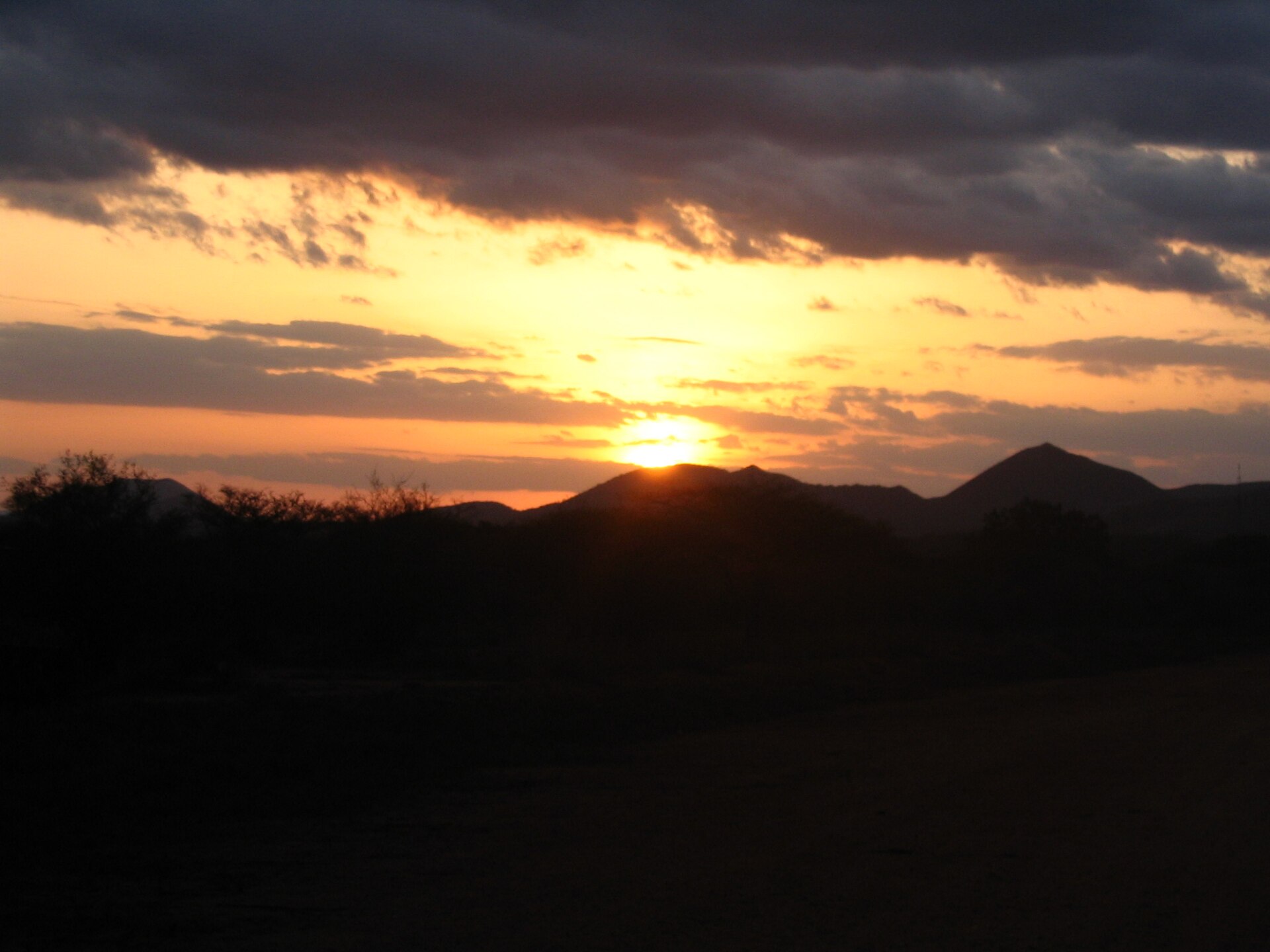
Tsavo is big. Very big. Tsavo East and Tsavo West national parks together cover more than 22,000 square kilometres, which makes them the largest protected wildlife area in Kenya and one of the largest in Africa. Here you can drive for an hour without seeing another vehicle, watch red-dusted elephants walk out of the bush, and look down on hippos through underwater glass at Mzima Springs. This Tsavo safari guide explains the difference between the two parks, when to go, how to get there and where to stay, so you can plan a trip that suits you.
Tsavo East and Tsavo West at a glance
- Where: south-east Kenya, between Nairobi and Mombasa. The Nairobi to Mombasa highway and the SGR railway run between the two parks.
- Size: Tsavo East is about 13,747 square kilometres and Tsavo West about 9,065 square kilometres.
- Status: both were gazetted in 1948 and are managed by the Kenya Wildlife Service.
- Known for: red elephants, big open spaces, volcanic landscapes, Mzima Springs, rhino, lions and some of the quietest game drives in the country.
- Getting there: about five to six hours by road from Nairobi, two to three hours from Mombasa or Diani, or by SGR train to Voi station.
Tsavo East or Tsavo West: which park should you choose?
The two parks feel very different, and many of our guests visit both. If you only have time for one, this comparison will help.
Tsavo East: wide plains and red elephants
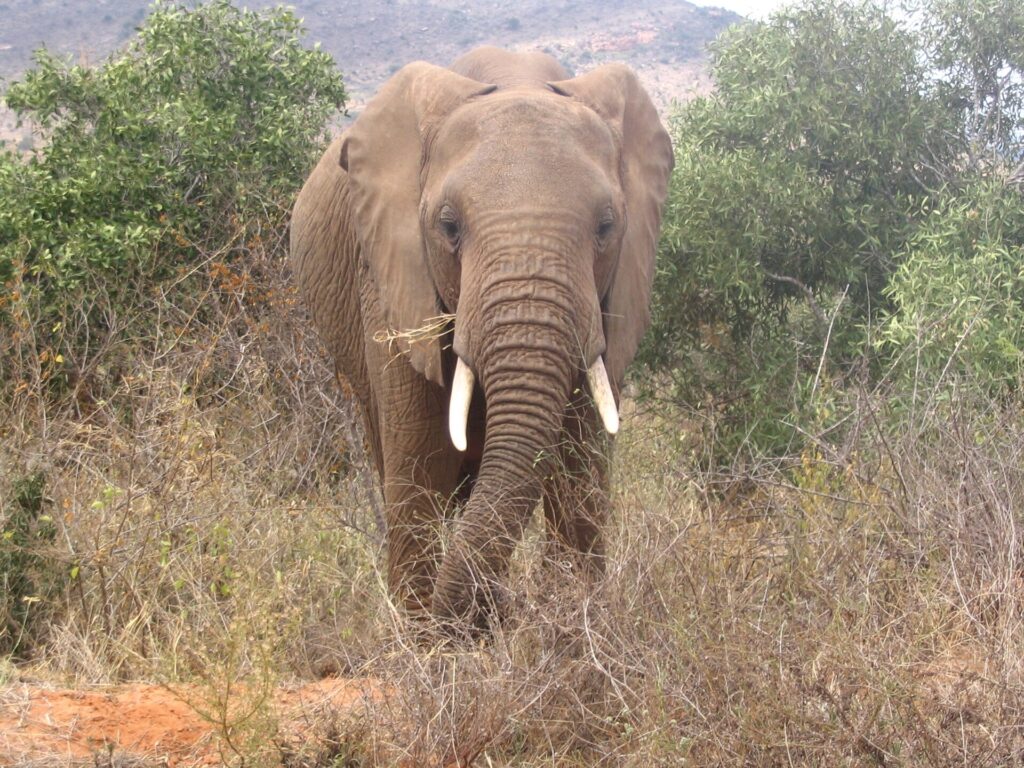
Tsavo East is flat, open and dry, with long views across grassland and thorn scrub. It is famous for its elephants, which dust themselves in the red volcanic soil and look rust-red as a result. Lions, cheetah, buffalo, Grant’s gazelle, gerenuk, lesser kudu and large herds of zebra are all regular sightings.
Key places to visit in Tsavo East:
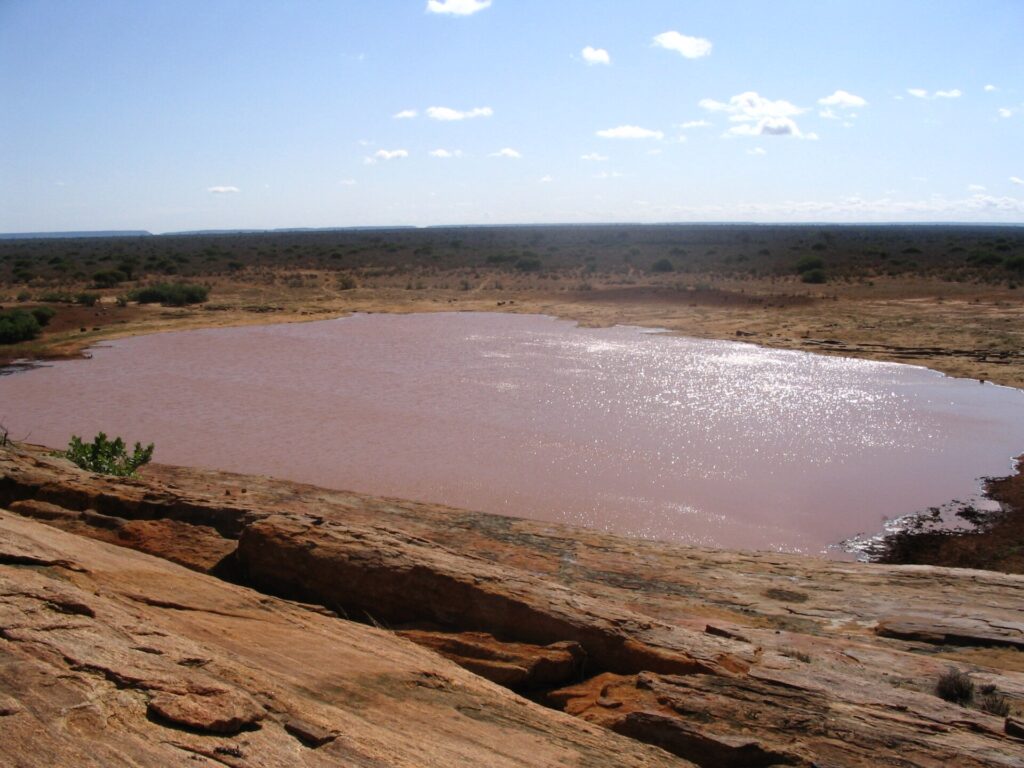
- Mudanda Rock: a 1.6-kilometre rock outcrop above a natural water catchment. In the dry season, elephants gather at the water below, and you can watch from the top of the rock.
- Lugard Falls: a series of rapids where the Galana River squeezes through water-sculpted rock. Look for crocodiles in the pools downstream.
- Aruba Dam: a reservoir that draws wildlife throughout the dry months, with lodges and camps nearby.
- Yatta Plateau: one of the longest lava flows in the world, running for close to 300 kilometres along the edge of the park.
Tsavo West: volcanoes, springs and rhino
Tsavo West is more rugged, with hills, lava flows and greener vegetation. Game viewing can take a little more patience because the bush is thicker, but the scenery is some of the most dramatic in Kenya, with Mount Kilimanjaro visible on clear mornings.
Key places to visit in Tsavo West:
- Mzima Springs: crystal-clear pools fed by water that filters underground from the Chyulu Hills. An underwater viewing chamber lets you watch hippos and fish below the surface.
- Shetani Lava Flow: a black field of solidified lava that you can walk across with a ranger. Local stories link its name to the devil.
- Ngulia Rhino Sanctuary: a fenced, guarded area at the foot of the Ngulia Hills where black rhino are protected.
- Chaimu Crater and Roaring Rocks: short climbs with wide views over the park.
- Lake Jipe: a quiet lake on the Tanzanian border, good for birdwatching and boat trips.
The story of the Man-Eaters of Tsavo
Tsavo has one of the most famous wildlife stories in Africa. In 1898, during construction of the Uganda Railway, two maneless male lions killed a number of railway workers near the Tsavo River bridge before they were shot by Lieutenant-Colonel John Henry Patterson. The story inspired books and films, and the lions are now on display at the Field Museum in Chicago. You can read more about the Tsavo Man-Eaters. Tsavo’s male lions still often have short or very little mane, which is thought to be linked to the heat.
Wildlife you can see in Tsavo
Tsavo is home to all of the Big Five, although leopard and rhino take luck and patience. The wildlife highlights include:
- Elephants: the Tsavo ecosystem holds the largest elephant population in Kenya.
- Lions and cheetah: most often seen on the open plains of Tsavo East.
- Black rhino: protected in the Ngulia Rhino Sanctuary in Tsavo West.
- Dry-country species: gerenuk, lesser kudu, fringe-eared oryx and Somali ostrich.
- Birds: more than 500 species have been recorded, including hornbills, weavers, sunbirds and many raptors.
Best time to visit Tsavo
Tsavo can be visited all year, but the season changes the experience.
- June to October (long dry season): the best months for game viewing. The bush thins out and animals gather at waterholes, dams and rivers.
- January to February (short dry season): another good window, with green landscapes and fewer visitors.
- March to May (long rains): green and quiet, with lower lodge rates. Some tracks can be muddy, and animals are more spread out.
- November to December (short rains): short afternoon showers, migrant birds and fresh grass.
Tsavo is hot, especially in the lower parts of Tsavo East, so plan your game drives for early morning and late afternoon and rest at the lodge in the middle of the day.
How to get to Tsavo
By road
The Nairobi to Mombasa highway passes the main gates of both parks. From Nairobi, the Mtito Andei gate of Tsavo West is about four to five hours away, and the Voi gate of Tsavo East is about five to six hours away. From the coast, Voi is about two to three hours from Mombasa. Our team arranges private safari vehicles with pop-up roofs for game viewing.
By train
The Madaraka Express SGR train stops at Voi, a short drive from the Tsavo East gate. Many guests combine a train journey with a Tsavo safari and a few days on the beach. Book tickets early in the holidays, because trains fill up fast.
By air
Charter flights can land at airstrips in and around both parks, which suits travellers who are short on time.
Where to stay in Tsavo
Tsavo has a good range of lodges and camps, from classic lodges with waterhole views to remote tented camps. These are some of the properties we book:
- Kilaguni Serena Safari Lodge, Tsavo West: a classic lodge looking over a busy waterhole, with views to Kilimanjaro on clear days.
- Voyager Ziwani Camp, Tsavo West: a tented camp on the edge of the park, close to Lake Jipe.
- Kipalo Hills, Mbulia Conservancy: a small, upmarket retreat with wide views over the Tsavo plains.
- Ashnil Aruba Lodge, Tsavo East: close to Aruba Dam, which pulls in wildlife in the dry season.
- Kudu Safari Camp, Tsavo East: a relaxed camp that suits a short safari from the coast.
- Salt Lick Safari Lodge and Taita Hills Safari Resort & Spa: in the private Taita Hills Wildlife Sanctuary next to Tsavo West. Salt Lick’s rooms stand on stilts above a waterhole.
Park fees
Tsavo East and Tsavo West share the same conservation fee. On the Kenya Wildlife Service schedule published in October 2025, the adult rate is KSh 1,000 for East African citizens, KSh 1,350 for residents and USD 80 for non-residents. Fees are paid electronically, and KWS can change them, so we confirm the current rates when we quote your safari.
Combining Tsavo with other trips
Tsavo’s location makes it easy to combine with other destinations:
- Tsavo and the coast: two or three nights in Tsavo followed by a beach stay in Diani or Watamu is one of the most popular bush-and-beach holidays in Kenya.
- Tsavo and Amboseli: drive from Tsavo West to Amboseli for elephants under Kilimanjaro. Read our Amboseli safari guide.
- Day trips from the coast: a long day in Tsavo East from Mombasa or Diani suits travellers with limited time, although an overnight stay gives you the best light and the best sightings.
Tips for a better Tsavo safari
- Stay at least two nights. Distances are long, and two nights let you explore without rushing.
- Bring sun protection. A wide-brimmed hat, sunscreen and plenty of water are essential in the heat.
- Wear neutral colours. Khaki, olive and brown are best. Avoid dark blue and black, which attract tsetse flies.
- Bring binoculars. Tsavo’s open spaces mean animals are often some distance away.
- Visit the Sheldrick Trust. The Sheldrick Wildlife Trust runs elephant reintegration units in Tsavo, where orphaned elephants are returned to the wild. Ask us about visiting.
Plan your Tsavo safari with B Hudson Tours
We plan Tsavo safaris for couples, families and groups, by road, by SGR or by air. Tell us your dates and the kind of stay you want, and we will recommend the right lodge and route. Browse our Tsavo packages or all our safari experiences.
Tsavo safari FAQs
Is Tsavo East or Tsavo West better?
Tsavo East is better for open-plain game viewing and red elephants. Tsavo West is better for scenery, Mzima Springs and rhino. If you have three nights or more, visit both.
How many days do I need in Tsavo?
Two nights is a good minimum. Three or four nights lets you cover both parks.
Can I visit Tsavo on a day trip from Mombasa or Diani?
Yes, Tsavo East is close enough for a long day trip. You will leave early and return in the evening, so an overnight stay is more relaxed.
Are the Big Five in Tsavo?
Yes. Elephants, buffalo and lions are seen often. Leopard and rhino are harder to find, and rhino are best seen in the Ngulia Rhino Sanctuary.
Is Tsavo good for families?
Yes. The lodges are comfortable, and the bush-and-beach combination works well for children. Check minimum ages with each camp.
Ready to plan your Tsavo safari? Contact B Hudson Tours and we will design it around you.
Leave a Reply